



Introduction — Why Commercial EV Charging Matters Now
Electric vehicle adoption is accelerating globally, and commercial properties are at the center of this shift. Whether you manage a retail center, office complex, fleet depot, or multi-family housing, the question is no longer whether to offer charging — it is which type of commercial ev charging delivers the most practical value for your specific operation.
The market offers several types of EV chargers, each designed for different use cases, power levels, and budgets. Understanding the real-world differences between these electric vehicles charger types helps you avoid costly mismatches between what you install and what your drivers actually need. This guide compares the major ev charger types across speed, cost, infrastructure, and revenue potential, then maps each option to the business scenarios where it performs best.
- Overview of the Main Types of EV Chargers
- Head-to-Head Comparison: Level 2 vs DC Fast Charging
- Key Practical Functions That Set Them Apart
- Which Type Fits Your Business Scenario?
- How to Choose the Right Commercial EV Charging Station
- Conclusion
Overview of the Main Types of EV Chargers
At the highest level, the industry classifies EV charging into three tiers based on voltage, power output, and charging speed. Each tier serves a distinct role in the commercial ev charging ecosystem, and understanding these differences is the first step toward making a sound infrastructure investment.
Level 1 Charging (120V AC)
Level 1 charging uses a standard 120-volt household outlet and delivers 1–1.8 kW of power. It adds roughly 3–5 miles of range per hour — enough for overnight top-ups on a plug-in hybrid but impractical for most commercial ev charging settings. Almost every electric vehicle can use Level 1, but the slow speed makes it a poor fit for businesses that need meaningful daily throughput. You will rarely see Level 1 deployed as a commercial solution; it exists primarily as a residential fallback.
Level 2 Charging (240V AC)
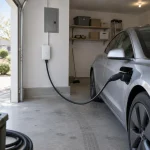
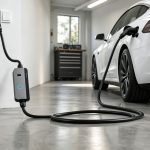
Level 2 is the workhorse of commercial ev charging. Operating at 208–240 volts in North America (or 230–400 volts in Europe), these units deliver 3.3–19.2 kW of AC power. The vehicle’s onboard charger converts that AC to DC before storing it in the battery. A typical Level 2 session adds 10–75 miles of range per hour, meaning a full charge takes 4–10 hours depending on battery size.
Level 2 chargers dominate workplace charging, retail locations, hotels, and multi-family residences — anywhere drivers park for extended periods. They are the most widely installed types of ev charging stations worldwide, and for good reason: moderate hardware costs, straightforward electrical requirements, and compatibility with virtually every EV on the road. When businesses evaluate ev charger types for their property, Level 2 is almost always the starting point.
DC Fast Charging (Level 3)
DC fast chargers bypass the vehicle’s onboard converter entirely, delivering high-voltage direct current (400–1,000 volts) straight to the battery. Power outputs range from 50 kW to over 350 kW, enabling an 80 percent charge in 20–60 minutes. This speed comes with trade-offs: higher hardware costs, the need for three-phase industrial power, and greater demand charges from utilities.
DC fast charging is the standard along highway corridors, at travel centers, and in fleet hubs where vehicles need rapid turnaround. As battery capacities grow and 800-volt architectures become more common, DC fast chargers continue to push higher, with some models now capable of 500 kW or more. For commercial ev charging operators targeting high-traffic corridors, DC fast infrastructure is becoming essential.
Head-to-Head Comparison: Level 2 vs DC Fast Charging
For most commercial buyers, the real decision comes down to Level 2 versus DC fast charging. Both serve important roles in the commercial ev charging landscape, but they differ fundamentally in speed, cost, and infrastructure requirements. The table below summarizes the key specifications side by side.
| Feature | Level 2 (AC) | DC Fast Charging (DC) |
|---|---|---|
| Voltage | 208–240V AC | 400–1,000V DC |
| Power Output | 3.3–19.2 kW | 50–350+ kW |
| Range Added per Hour | 10–75 miles | 180–240+ miles |
| Time to 80% Charge | 4–10 hours | 20–60 minutes |
| Hardware Cost per Port | $1,000–$6,000 | $38,000–$90,000+ |
| Installation Cost per Port | $2,500–$3,500 | $20,000–$60,000 |
| Electrical Requirement | 240V circuit | 480V three-phase |
| Typical Use Case | Workplace, retail, hospitality | Highway, fleet, travel center |
| Connector Types | J1772 | CCS, CHAdeMO, NACS |
Key Practical Functions That Set Them Apart
Beyond the specification sheet, the practical differences between types of ev chargers become clearer when you examine how they perform in real-world commercial ev charging settings.
Charging Speed and Turnover Rate
Speed is the most visible difference. A 50 kW DC fast charger can deliver roughly 200 miles of range in an hour, while a 19.2 kW Level 2 unit adds about 60 miles in the same time. For a highway rest stop or a fleet running multiple shifts, that difference translates directly into driver satisfaction and vehicle uptime.
However, speed alone does not determine practical value. A workplace parking lot where vehicles sit for 8 hours gains little from a DC fast charger — the Level 2 unit finishes the job at a fraction of the cost. The right speed is the speed your dwell time can actually use. Overspending on DC fast infrastructure for a low-turnover commercial ev charging site is one of the most common mistakes buyers make.
Installation Cost and Infrastructure Requirements
According to the U.S. Department of Energy’s Alternative Fuels Data Center, public Level 2 charger installation averages approximately $2,500–$3,500 per connector, while DC fast charging installation ranges from $20,000 to $60,000 per connector depending on power output and site conditions. Hardware costs add another $38,000–$90,000+ for DC fast equipment.
These figures matter because infrastructure upgrades — new transformers, trenching, utility service increases — can multiply the total project cost. A commercial property with existing 480V three-phase power will find DC fast charging far more affordable than a site that needs a complete electrical upgrade. Always get a site assessment before committing to a commercial ev charging station deployment.
Operating Costs and Revenue Potential
Level 2 chargers draw modest power and typically avoid utility demand charges. DC fast chargers, by contrast, create short but intense power spikes that can trigger significant demand charges — sometimes adding hundreds of dollars per month to the electricity bill.
On the revenue side, DC fast chargers command higher per-kWh pricing and higher daily session counts in high-traffic locations. A busy DC fast charging site may see double the daily sessions of a Level 2 installation, with greater kWh throughput per session. The profitability equation depends on utilization: a DC fast charger in a low-traffic location may never recover its higher upfront and operating costs.
Connector Compatibility and Vehicle Coverage
Level 2 chargers in North America use the J1772 connector, which is compatible with every EV sold in the market. DC fast chargers use CCS (Combined Charging System), CHAdeMO, or NACS (Tesla’s connector). The industry is converging on NACS and CCS, but older CHAdeMO-equipped vehicles still on the road require adapters or dedicated ports.
For a commercial ev charging station operator, connector strategy affects how many drivers you can serve. A multi-standard DC fast charger that supports both CCS and NACS covers the widest range of current and upcoming EV models. As the North American market shifts toward NACS, planning for that transition now avoids costly retrofitting later.
Which Type Fits Your Business Scenario?
The table below maps common commercial settings to the charger type that typically delivers the best practical return.
| Business Type | Recommended Charger | Why |
|---|---|---|
| Workplace / Office | Level 2 (7–19.2 kW) | Vehicles park 6–10 hours; overnight-style charging is sufficient |
| Retail / Shopping Center | Level 2 + DC Fast | Level 2 for regular shoppers; DC fast for quick top-ups and high-turnover spots |
| Hotel / Hospitality | Level 2 | Guests park overnight; fast charging is unnecessary |
| Fleet Depot (light-duty) | Level 2 (high-port count) | Vehicles return to depot daily; charge overnight at low cost |
| Fleet Depot (heavy-duty) | DC Fast Charging | Multiple shifts or rapid turnaround require fast replenishment |
| Highway / Travel Center | DC Fast (150+ kW) | Drivers need 80% in under 30 minutes |
| Multi-Family Housing | Level 2 | Residents park for extended periods; cost-effective per-port deployment |
How to Choose the Right Commercial EV Charging Station
Once you understand the differences between ev charger types, the next step is matching those capabilities to your site’s specific constraints and goals.
Assess Your Site’s Electrical Capacity
Before selecting a charger type, have a licensed electrician evaluate your property’s available power. Level 2 chargers need a dedicated 208–240V circuit — straightforward for most commercial buildings. DC fast chargers require 480V three-phase power, which may not be available at every site. If a utility upgrade is needed, factor that cost into your commercial ev charging budget. Some utilities offer commercial EV charging rate programs that can significantly reduce operating costs.
Estimate Daily Charging Demand
Think about how many vehicles need charging each day, how long they park, and what state of charge they need. A fleet of 20 delivery vans that returns to the depot at 30 percent battery and parks for 12 hours can be fully charged with Level 2 units. A ride-share fleet that needs vehicles back on the road in 45 minutes requires DC fast charging. Match the charger speed to your actual turnaround window, not to a theoretical maximum.
Factor in Future Scalability
EV adoption is growing rapidly, and today’s charging plan should accommodate tomorrow’s demand. Consider reserving electrical capacity for additional chargers, pre-wiring for future DC fast charging, and choosing networked chargers with software that can manage load balancing and remote monitoring. A scalable commercial ev charging station design protects your investment as the market evolves and vehicle battery capacities continue to increase.
Conclusion — Matching the Right Charger to Your Operation
There is no single best type of commercial ev charging — the right choice depends on your drivers’ dwell time, your site’s electrical infrastructure, and your budget. Level 2 charging offers the broadest practical value for workplaces, retail, hospitality, and fleet depots with overnight parking. DC fast charging is essential where speed and turnover matter: highway corridors, travel centers, and high-utilization fleets.
The most effective commercial ev charging strategies often combine both types, deploying Level 2 for the majority of ports and adding DC fast chargers where rapid service justifies the investment. For operators ready to explore high-performance DC charging hardware, EV Taurus Power’s DC EV charger lineup covers the 20–240 kW range with options for advertising displays and energy storage integration.