

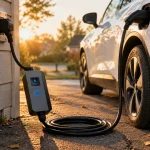

What Is a Portable EV Charger?
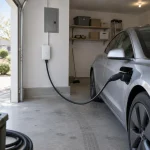
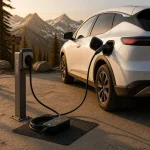
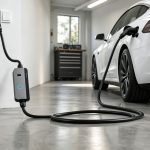
A portable EV charger — formally called a portable Electric Vehicle Supply Equipment (EVSE) — is a compact, plug-and-play device that lets you charge an electric vehicle from a standard electrical outlet without permanent installation. Unlike wall-mounted home chargers, a portable electric car charger travels with you: toss it in the trunk, plug it into a compatible outlet at home, a hotel, or a campsite, and your car starts drawing power.
These portable ev chargers have become essential for EV owners who lack a dedicated home charging setup, frequently travel between locations, or simply want a reliable backup. Most new EVs ship with a basic Level 1 unit, but many drivers upgrade to a dual-voltage ev portable charger that supports both 120 V and 240 V outlets for significantly faster charging on the go.
Whether you call it an electric car charger portable unit, a portable car charger for ev use, or simply a portable charger for electric cars, the core function remains the same: it safely converts AC power from a wall outlet into a controlled charging session that your vehicle’s onboard charger can accept. A quality electric car portable charger is not just a cable — it is an intelligent device that communicates with your vehicle before and during every charge. Portable ev chargers give drivers the freedom to charge anywhere there is an electrical outlet, making them indispensable for road trips, business travel, and apartment living.
Core Components Inside a Portable EV Charger
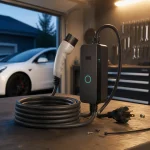
Every portable electric car charger shares the same fundamental architecture, regardless of brand or power rating. Understanding these components helps you evaluate quality when comparing different portable electric car chargers on the market:
- Control box (or “brick”) — houses the circuitry that manages power delivery, safety monitoring, and communication with the vehicle. This is the brain of any portable ev charger for car applications.
- Supply cable — connects the control box to the wall outlet via a NEMA plug (North America) or a Type F / Type G plug (Europe / UK).
- EV cable with connector — delivers electricity to the vehicle through a J1772 (North America) or Type 2 (Europe) connector.
- Control Pilot (CP) module — generates the signaling handshake between charger and car, a critical feature in every electric vehicle portable charger.
- Safety subsystem — GFCI, overvoltage, overcurrent, and thermal protection circuits that make a portable charger for ev cars safe for unsupervised use.
The control box is what separates a proper EVSE from a simple extension cord. It actively monitors voltage, current, and temperature — and only allows power to flow once the vehicle confirms it is ready to receive it. This is why a quality portable charger for ev car use costs more than a basic cable: the electronics inside are doing real safety work. When you invest in portable ev chargers, you are paying for these intelligent safety systems, not just copper wire and plastic housing. Every portable electric car charger worth buying includes this control box as its centerpiece, and every ev portable charger on the market today relies on the same core components.
How Portable EV Chargers Work: The Charging Sequence
When you plug a portable charger for electric cars into an outlet and connect it to your vehicle, a precise sequence unfolds in milliseconds:
- Physical connection — the connector seats into the vehicle’s charge port, closing the Proximity Pilot (PP) circuit.
- Handshake initiation — the EVSE sends a +12 V Control Pilot signal; the vehicle responds by pulling the voltage to +9 V, confirming it is connected but not yet ready.
- Charging request — the vehicle’s onboard charger signals readiness by dropping the CP voltage to +6 V.
- Power delivery — the EVSE closes its internal relay, and AC electricity begins flowing to the vehicle’s onboard charger, which converts it to DC for the battery.
- Ongoing monitoring — throughout the session, both the charger and the vehicle continuously exchange status data via the CP line, adjusting current if temperatures rise or faults are detected.
This entire process follows the IEC 61851 standard, which governs conductive charging systems worldwide. The standard defines six distinct states — from “vehicle not connected” to “error” — ensuring that any compliant electric vehicle portable charger can safely communicate with any compliant EV, regardless of manufacturer.
For buyers evaluating portable ev chargers, this standardized handshake is a key reason why any J1772 or Type 2 portable charger works with any compatible vehicle. You are not locked into a proprietary ecosystem. A well-designed portable ev charger for car use follows the same protocol whether it costs $200 or $600. The IEC 61851 standard ensures that your portable charger for ev cars will work safely with your current vehicle and any future EV you purchase. This interoperability is what makes portable ev chargers so practical — buy one today and it will likely work with your next electric vehicle too.
Voltage Conditions Explained: Level 1 vs. Level 2 Portable Charging
The biggest factor that determines how fast your portable ev chargers replenish the battery is the voltage of the outlet you plug into. Here is a detailed side-by-side comparison:
| Specification | Level 1 (120 V) | Level 2 (240 V) |
|---|---|---|
| Typical outlet | Standard household (NEMA 5-15) | Dryer / range outlet (NEMA 14-50 or 6-20) |
| Power output | 1.2 – 1.9 kW | 3.3 – 9.6 kW |
| Amperage | 12 – 16 A | 16 – 48 A |
| Range added per hour | 3 – 5 miles | 15 – 40 miles |
| Full charge time (60 kWh battery) | 30 – 50 hours | 6 – 18 hours |
| Installation required | None | Dedicated 240 V circuit recommended |
Data source: U.S. Department of Energy, Alternative Fuels Data Center — Electric Vehicle Charging Stations
Most modern portable electric car chargers are dual-voltage: they auto-detect whether they are plugged into a 120 V or 240 V outlet and adjust their output accordingly. This flexibility makes a dual-voltage ev portable charger far more versatile than a single-voltage unit, especially for drivers who split time between home and travel locations with different outlet types. A dual-voltage portable ev charger lets you charge slowly at a hotel’s 120 V outlet overnight, then switch to 240 V at home for a full charge in just a few hours.
According to the U.S. Department of Energy, Level 1 and Level 2 charging are expected to handle 80% of all EV charging by 2030, underscoring how central portable and home AC charging remains to the EV ecosystem. For fleet managers and B2B buyers, this means investing in quality ev chargers portable units is a long-term strategy, not a stopgap. Portable ev chargers are becoming the standard solution for businesses that need flexible charging across multiple locations.
Common NEMA Plug Types for Portable EV Chargers
In North America, the plug on your electric car portable charger must match the outlet you plan to use. Here are the most common configurations:
| NEMA Type | Voltage | Max Amperage | Typical Use |
|---|---|---|---|
| NEMA 5-15 | 120 V | 15 A | Standard household outlet |
| NEMA 5-20 | 120 V | 20 A | Heavy-duty household / garage |
| NEMA 6-20 | 240 V | 20 A | Small workshop / dryer circuit |
| NEMA 10-30 | 240 V | 30 A | Older dryer outlet (3-wire) |
| NEMA 14-50 | 240 V | 50 A | Modern range / EV outlet (4-wire) |
Many portable ev chargers ship with interchangeable plug adapters, letting you switch between a NEMA 5-15 for household use and a NEMA 14-50 for faster 240 V charging. Always confirm that the adapter matches your circuit’s amperage rating — using a 50 A adapter on a 20 A circuit creates a fire hazard. When shopping for a portable charger for electric cars, check which adapters are included in the package, as buying adapters separately can add $50–$100 to your total cost. The best portable ev chargers include at least two adapter types in the box.
The Control Pilot Signal: Communication Between Charger and Vehicle
At the heart of every safe charging session is the Control Pilot (CP) signal, defined by the IEC 61851 standard. This is a low-voltage Pulse Width Modulation (PWM) signal that travels over a dedicated wire in the charging cable. Every portable charger for ev cars relies on this protocol to ensure safe operation.
The EVSE generates a 1 kHz square wave at ±12 V. The duty cycle of this signal tells the vehicle the maximum current the charger can supply. Meanwhile, the vehicle changes the voltage level on the CP line to communicate its own state:
| CP Voltage | State | Meaning |
|---|---|---|
| +12 V | A | Vehicle not connected |
| +9 V | B | Vehicle connected, not ready |
| +6 V | C | Vehicle ready, charging begins |
| +3 V | D | Vehicle ready, ventilation required |
| 0 V | E | Error — no power delivered |
| −12 V | F | Fault — charger shuts down |
This handshake ensures that electricity never flows unless both the charger and the vehicle agree it is safe to do so. If a fault is detected at any point — a loose connection, a ground fault, or an over-temperature condition — the CP signal drops to 0 V and the charger’s relay opens instantly. This is why a properly designed portable charger for ev car use is inherently safe, even when left unattended overnight. The Control Pilot protocol is what makes portable ev chargers safe for home use, hotel parking lots, and public charging points alike. Without this communication protocol, portable ev chargers would be no safer than a standard extension cord.
Safety Mechanisms in Portable EV Chargers
Charging an electric vehicle involves sustained high current over many hours, which is why every quality portable charger for ev cars includes multiple layers of protection:
- GFCI (Ground Fault Circuit Interrupter) — detects current leakage and cuts power within milliseconds to prevent electric shock. The 2023 NEC requires GFCI protection on all receptacles used for EV charging.
- Overvoltage protection — monitors input voltage and disconnects if it exceeds safe thresholds (typically above 264 V for a 240 V system).
- Overcurrent protection — a built-in circuit breaker prevents the charger from drawing more current than the cable or outlet can handle.
- Thermal monitoring — temperature sensors in the plug and control box reduce current or shut down the charger if components overheat.
- Lightning and surge protection — varistors absorb voltage spikes from the grid.
When using an electric car portable charger outdoors or in damp environments, always verify that the unit carries an appropriate IP rating (IP65 or higher is recommended) and that the outlet itself is GFCI-protected. These precautions are especially important for portable car charger for ev applications at campsites, marinas, or rural properties where outlet quality may vary. A quality ev portable charger should never compromise on safety features, regardless of price point. When comparing portable ev chargers, always check the safety specifications before looking at charging speed or price. A well-built portable ev charger will list every protection mechanism on its spec sheet.
How to Choose the Right Portable EV Charger
With dozens of models on the market, selecting the right portable ev charger for car use comes down to a few key criteria. Choosing the right portable ev chargers means balancing speed, safety, and convenience against your budget:
| Factor | What to Look For |
|---|---|
| Dual-voltage support | Auto-switches between 120 V and 240 V for maximum flexibility |
| Amperage rating | 32 A or higher on 240 V for practical daily charging |
| Cable length | 20–25 ft to reach most outlets from your parking position |
| Safety certifications | UL listing (US) or CE marking (EU); IEC 61851 compliance |
| Connector type | J1772 for most EVs; NACS for Tesla and newer 2025+ models |
| Portability | Lightweight control box, compact storage bag |
| Smart features | Wi-Fi connectivity, charging schedules, energy tracking |
For B2B buyers and fleet operators, consider whether an electric car charger portable unit supports load management or OCPP connectivity — features that become critical when deploying multiple portable electric car chargers across several locations. A portable charger for electric cars that integrates with fleet management software can reduce energy costs by shifting charging to off-peak hours automatically. When evaluating portable ev chargers for commercial use, also check warranty terms and after-sales support, as these units will see heavy daily use. The best portable ev chargers for business use offer at least a two-year warranty and responsive technical support.
Portable vs. Wall-Mounted Chargers: When Each Makes Sense
A portable unit is not a replacement for a wall-mounted Level 2 station — it is a complement. Here is how the two compare for typical buyers:
| Criterion | Portable Charger | Wall-Mounted Charger |
|---|---|---|
| Installation | Plug and play | Professional installation required |
| Max power | Up to 9.6 kW (40 A) | Up to 19.2 kW (80 A) |
| Portability | High — travels with you | Fixed location |
| Best use case | Travel, backup, apartments | Daily home charging |
| Cost | $200 – $600 | $400 – $1,200 + installation |
Many EV owners keep a wall-mounted unit at home for daily use and carry a portable charger for ev cars for road trips, visits to family, or charging at vacation properties. For apartment dwellers and renters, a portable electric car charger may be the only practical option — just confirm that your landlord allows outlet use for EV charging. Portable ev chargers are also popular with rideshare drivers who need to charge at multiple locations throughout their shift. The flexibility of portable ev chargers makes them an essential part of any EV owner’s charging strategy, whether for personal or commercial use.
Conclusion
Portable EV chargers are far more sophisticated than a simple cable and plug. They rely on standardized communication protocols, precise voltage management, and multiple safety systems to deliver reliable charging wherever an electrical outlet is available. Understanding the voltage conditions — 120 V Level 1 versus 240 V Level 2 — and the role of the Control Pilot signal helps you make an informed decision about which portable ev charger fits your driving habits and electrical infrastructure.
Whether you are an EV owner looking for charging flexibility on the road or a business evaluating portable charging solutions for your fleet, the key is matching the charger’s voltage and amperage capabilities to your actual outlets and daily mileage needs. Portable ev chargers are a smart investment for anyone who values the freedom to charge anywhere, and they continue to improve in speed, safety, and connectivity with each new generation. The portable ev charger market is evolving rapidly, with newer models offering higher amperage, better thermal management, and smarter connectivity features. For teams exploring a range of portable ev chargers, EV Taurus Power’s portable EV charger lineup covers dual-voltage models from 16 A to 32 A that adapt to different outlet configurations. Investing in quality portable ev chargers today means you are ready for wherever the road takes you tomorrow.