


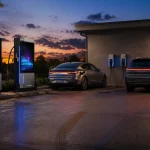
Introduction to the EV Charging Station Business
The ev charging station business has evolved from a niche green infrastructure project into a high-growth, mainstream commercial opportunity worldwide. As electric vehicle sales surge across North America, Europe, and emerging markets, businesses, property owners, and fleet operators are racing to deploy reliable, scalable charging solutions to meet driver demand and comply with new carbon regulations.
This guide breaks down the current market landscape, data-backed growth projections, and definitive technology trends shaping the future of commercial electric vehicle charging stations. Whether you are evaluating an investment in charging infrastructure, upgrading an existing facility, or sourcing equipment for a client project, this analysis will help you make strategic, future-proof decisions.
Current State of the Global EV Charging Station Market
The global market for commercial charging stations is entering a period of accelerated expansion, driven by policy mandates, falling EV prices, and growing pressure on businesses to offer charging as a standard amenity.
According to BloombergNEF’s 2025 Electric Vehicle Outlook, the European and North American commercial charging markets alone are projected to grow from an estimated $18 billion in 2025 to over $70 billion by 2030, representing a compound annual growth rate (CAGR) of more than 30%. Unlike the early adopter phase of the 2010s, today’s market is dominated by B2B buyers: retail centers, hotels, office parks, logistics fleets, and municipal authorities.
Regional Market Growth Forecast (2024–2030)
| Region | 2024 EV New Car Sales Share | 2030 Projected EV Penetration | Commercial Charging Market CAGR (2024–2030) |
| China | ~48% | ~80% | 22% |
| Europe | ~23% | ~58% | 31% |
| North America | ~11% | ~20% | 35% |
| Southeast Asia & Latin America | <5% | ~20–25% | 42% |
Data sources: IEA Global EV Outlook 2025; BloombergNEF Electric Vehicle Outlook 2025
A defining feature of today’s market is the shift from quantity-first deployment to quality-driven investment. Early commercial charging station deployments prioritized low-cost AC Level 2 units. Today, forward-looking businesses are investing in high-power DC fast chargers, smart networked systems, and solar-plus-storage integrated solutions to reduce operating costs and improve user experience.
EV Adoption Growth: Fueling Demand for Commercial EV Chargers
Rising electric vehicle adoption is the foundational driver of the ev charging station business. The International Energy Agency confirms that global EV sales grew by approximately 25% in 2024, surpassing 17 million units and capturing over 20% of the total new car market for the first time in history. By 2025, annual sales are expected to exceed 20 million units.
For commercial property and business owners, this trend creates two clear pressures:
- Customer expectation: EV drivers actively seek destinations with on-site charging, and will choose one retail center, hotel, or restaurant over another based on charging availability.
- Regulatory compliance: An increasing number of cities and regions are mandating charging infrastructure in new construction and major renovation projects, particularly for commercial parking lots.
The gap between vehicle growth and charging infrastructure is especially wide in Western markets. While China has achieved a car-to-charger ratio of roughly 3:1, many European and North American markets still have ratios of 15:1 or higher, creating enormous unmet demand for commercial electric car charging stations, per IEA 2025 data.
7 Core Trends Reshaping the EV Charging Station Business
1. Smart Charging & V2G Network Integration
Smart charging is no longer an optional premium feature — it is becoming the industry standard for commercial installations. Networked smart chargers allow operators to dynamically adjust charging speed based on grid load and electricity prices, schedule charging during off-peak hours to cut energy costs, monitor usage remotely, and participate in demand response programs.
Looking ahead, Vehicle-to-Grid (V2G) technology will transform chargers from passive energy consumers into active grid assets. McKinsey & Company’s analysis of V2X for commercial fleets projects that commercial fleets and large parking facilities will be able to sell stored battery power back to the grid during peak demand, creating an entirely new revenue stream for the ev charging station business.
2. Renewable Energy & Solar-Storage-Charging Integration
As electricity costs rise and sustainability targets become stricter, more commercial charging station operators are pairing their equipment with on-site solar panels and battery energy storage systems — a configuration known as “solar-storage-charging integration.”
This trend delivers three major business benefits:
- Reduces reliance on grid power and hedges against future electricity price increases
- Allows high-power DC charging at sites with limited grid capacity
- Strengthens a company’s ESG branding and green credentials
For industrial parks, logistics centers, and large retail complexes, integrated energy systems are rapidly becoming the default choice for new commercial charging station projects.
3. High-Power DC Fast Charging for Commercial Use
The average EV battery is growing larger, and drivers are increasingly unwilling to wait 2–3 hours for a charge. This is pushing the commercial market toward higher-power DC fast charging solutions.
While 7kW–22kW AC chargers remain ideal for all-day parking locations (offices, hotels), 60kW–180kW DC fast chargers are becoming standard for highway rest stops, retail centers, and fuel station locations. Premium locations are already beginning to deploy 360kW+ ultra-fast charging units to match the latest generation of 800V EV platforms, per the International Council on Clean Transportation (ICCT) charging infrastructure analysis.
4. Wireless Charging Technology
Although still in the early commercialization phase, wireless inductive charging is one of the most watched technologies in the ev charging station business. Embedded charging pads in parking lots require no cables or plugs, creating a frictionless user experience ideal for taxi fleets, delivery vehicles, and premium valet parking.
Major automakers and infrastructure providers are standardizing wireless charging hardware, and BloombergNEF analysts expect meaningful commercial deployments to begin scaling between 2027 and 2030.
5. Open Standards & Interoperability
Fragmented payment networks and proprietary charger systems have been a major pain point for drivers and operators alike. The industry is now moving decisively toward open standards:
- Universal plug compatibility (CCS, CHAdeMO, NACS)
- Open Charge Point Interface (OCPI) protocols for cross-network roaming
- Contactless payment support without requiring dedicated mobile apps
For businesses purchasing commercial EV chargers, choosing standards-compliant equipment reduces future obsolescence risk and improves customer satisfaction.
6. Fleet Electrification Driving Bulk Commercial Orders
Delivery vans, taxis, buses, and heavy-duty trucks are electrifying faster than many analysts predicted. This is creating large, predictable demand for commercial electric vehicle charging stations at depots, warehouses, and transit hubs.
Fleet charging has distinct requirements compared to public charging: higher total power capacity, scheduled overnight charging, integration with fleet management software, and heavy-duty durability. This has created a dedicated high-volume segment within the broader ev charging station business with strong B2B growth potential.
7. Focus on Durability, Safety & Long-Term Reliability
As the market matures, buyers are prioritizing build quality and total cost of ownership over upfront sticker price. Commercial chargers operate outdoors 24/7, withstand heavy usage, and must meet strict electrical safety standards.
Buyers now routinely evaluate:
- IP ingress protection rating
- Lightning protection and surge safety
- Average time between failures (MTBF)
- Availability of spare parts and long-term manufacturer support
This quality shift benefits experienced manufacturers with strong R&D and quality control systems, such as EVTAURUS with 55 issued patents and 12+ years of industry expertise.
Commercial EV Charging Station Infrastructure Innovations
Advanced Hardware & Future-Proof Design
Modern commercial charging stations are built with modular architectures, allowing power modules to be upgraded or replaced without changing the entire unit. This is critical in a fast-evolving market where charging speeds increase every 2–3 years.
Other key hardware innovations include liquid-cooled charging cables for high-power DC units, integrated touchscreens and status indicators, reinforced construction for heavy-traffic locations, and multi-standard plug support to serve all vehicle models.
User-Friendly Payment & Management Systems
Today’s ev chargers for business support multiple payment and access models:
- Pay-per-use: Credit card, Apple Pay/Google Pay, QR code scanning
- Membership & subscription: Monthly plans for regular users or fleets
- Free for customers: Controlled access for hotel guests, retail shoppers, or employees
- Centralized management: Cloud-based dashboard to monitor energy use, set pricing, and run diagnostics
A well-designed payment system reduces operational labor and improves driver satisfaction, directly increasing utilization rates and return on investment.
Best Practices for Commercial Electric Car Charging Station Installation
1. Strategic Location Selection
Site selection is the single biggest factor in a charging station’s utilization and profitability. For maximum return, prioritize locations with high daily vehicle traffic and long dwell times (shopping malls, hotels, office parks), proximity to major roads or highway exits, sufficient electrical grid capacity, and clear visibility for drivers.
For fleet depots, the optimal layout supports pull-through charging and does not disrupt normal vehicle routing and loading operations.
2. Critical Infrastructure Requirements
Before purchasing equipment, conduct a full site assessment covering:
- Electrical capacity: Confirm that the local grid connection can support the total power draw of your chargers, especially DC fast chargers.
- Civil works: Plan for cable trenching, foundation pads, and weather protection.
- Network connectivity: Smart chargers require reliable cellular or Ethernet connectivity for remote management.
- Safety compliance: All installations must meet local electrical codes, fire safety rules, and accessibility standards.
3. Future-Proofing Your Investment
Given the speed of industry change, the most costly mistake is building a system that becomes obsolete in 3–5 years. Follow these rules:
- Install conduit and cabling sized for higher future power levels, even if you start with lower-power chargers
- Choose networked, software-upgradable hardware from established manufacturers
- Reserve physical space for additional chargers and battery storage units
- Work with manufacturers that offer long-term product support and spare parts availability
Real-World Case Studies of Successful Deployments
Retail Sector: Shopping Center Charging Amenity
A mid-sized regional shopping center in Germany installed 12 150kW DC fast chargers and 24 22kW AC chargers in its main parking garage. Within 12 months, charging availability became a stated reason for visit in 18% of customer surveys, and average dwell time increased by 22 minutes per visit. The center also generates direct revenue from charging fees and advertising on charger displays.
Hospitality Industry: Hotel Guest Charging
A boutique hotel chain in the US added Level 2 commercial electric car chargers to 30% of its parking spaces, marketed as a complimentary guest amenity. The property reported a measurable lift in direct booking rates, and positive review mentions of “free EV charging” became a top differentiator compared to competing hotels without charging infrastructure.
Urban & Fleet Projects: Municipal Bus Depot
A municipal transport authority in Southern Europe deployed 40 high-power DC chargers at its main bus depot to support a 100-vehicle electric bus fleet. Using smart scheduling software, the fleet charges overnight during off-peak electricity rates, cutting energy costs by approximately 35% compared to daytime charging.
Government Incentives & Their Impact on Business Models
Grants, Tax Credits & Subsidies Overview
Government financial support remains a powerful accelerator for the ev charging station business across most major markets:
- European Union: The European Commission’s Connecting Europe Facility (CEF) provides hundreds of millions of euros in co-funding for cross-border charging infrastructure. Individual member states such as Germany, France, and Italy offer additional national and regional grants for commercial installations.
- United States: Under the Inflation Reduction Act (IRA) Section 30C, the U.S. Internal Revenue Service (IRS) offers federal tax credits covering up to 30% of hardware and installation costs for qualifying commercial charging stations (meeting prevailing wage requirements), with a $100,000 cap per charging unit. Additional state-level rebates are available in many regions.
- Global markets: Many national governments offer preferential electricity pricing, exemption from demand charges, and low-interest financing for large charging infrastructure projects.
Regulatory Impacts on Business Models
Policy is not just providing subsidies — it is reshaping how the charging business operates:
- New building codes increasingly require a minimum number of charging-ready parking spaces in commercial construction
- Carbon pricing and emissions trading systems make operating combustion vehicle fleets more expensive every year
- Grid codes are being updated to require smart charging capability and grid-friendly operation
For businesses, early deployment not only captures incentive money — it also positions operators ahead of mandatory requirements that will raise costs and increase competition later.
Future Opportunities & Final Takeaways
The ev charging station business is entering its mainstream growth phase. The era of pilot projects and early experimentation is over; today’s market is defined by large-scale rollouts, professional operations, and mature supply chains.
For entrepreneurs, property owners, and B2B solution providers, the biggest opportunities lie in:
- High-power DC fast charging along highways and high-traffic commercial locations
- Integrated solar-storage-charging systems for industrial and logistics sites
- End-to-end fleet electrification solutions for delivery, taxi, and municipal fleets
- Smart software and energy management services that improve returns on installed hardware
Partner With an Experienced Commercial EV Charging Manufacturer
Success in the commercial charging business starts with choosing the right equipment partner. EVTAURUS is a professional manufacturer of EV charging equipment with over 12 years of industry experience and 55 registered technology patents. We supply a full range of AC and DC EV chargers, portable charging solutions, charging cables, and adapters — all available with full OEM/ODM customization to match your project requirements.
If you are planning a commercial charging station deployment, sourcing equipment for resale, or looking for a reliable manufacturing partner for your ev charging station business, our engineering team can provide tailored product solutions and technical support. Contact EVTAURUS today to request product specifications and a custom quotation for your project.