


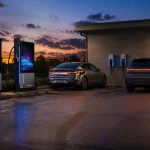
Why Power Level Matters for Commercial EV DC Fast Charging
Choosing the right ev dc fast charger is one of the most consequential infrastructure decisions a commercial operator will make in 2026. The power level you select for your electric vehicle dc fast charger determines how quickly vehicles recharge, how many sessions you can deliver per day, and — critically — how much you spend on both equipment and grid connection.
The global market for every type of dc fast charger for ev applications is expanding rapidly. According to the IEA’s Global EV Outlook 2025, the European Union alone grew its fast-charger network by nearly 50% in 2024, while ultra-fast charger deployments surged 60% year over year. In the United States, over 18,000 new DC fast-charging ports came online in 2025, with forecasts pointing to more than 19,500 additional ports in 2026.
Yet the majority of commercial sites do not need the highest available power from their fast dc ev charger. The sweet spot depends on your daily traffic volume, the vehicles you serve, your local grid capacity, and your budget. This guide breaks down the three most common commercial power tiers — 60 kW, 120 kW, and 180 kW — so you can match the right dc fast charger ev configuration to your specific operation.
Understanding the Three Main Power Tiers
Every dc fast ev charger on the market falls into a power band that determines its peak output. While actual charging speed also depends on the vehicle’s battery acceptance rate, the charger’s rated power sets the ceiling. Here is what each tier of ev dc fast charging looks like in practice for commercial operators evaluating a new ev dc fast charger deployment.
60kW — Entry-Level Commercial Charging
A 60 kW ev dc fast charger is the most affordable entry point into DC fast charging for commercial use. This power level suits locations where vehicles park for 30 minutes or longer — think suburban retail centers, hotel parking lots, or workplace depots with moderate EV traffic. As a dc fast charger for ev fleets, the 60 kW tier delivers reliable, cost-effective service without overloading existing electrical infrastructure.
For a typical 60 kWh battery, a 60 kW unit delivers a 20–80% charge in roughly 50–70 minutes. That is slower than higher-powered alternatives, but it is more than adequate when drivers are already spending an hour on-site. For operators who need a dependable electric vehicle dc fast charger at a manageable price point, 60 kW is the logical starting line.
Key advantages:
- Lower equipment cost — typically $3,000–$6,000 for the charger unit
- Smaller transformer requirement (≥75 kVA), often avoiding costly grid upgrades
- Compact footprint, suitable for sites with limited space
- Lower ongoing electricity demand charges
Best fit: Community charging, small fleet depots, commercial parking structures, and locations with constrained grid capacity where a dc fast charger ev setup must work within tight electrical limits.
120kW — The Versatile Mid-Range Option
The 120 kW ev dc fast charger has become the workhorse of commercial charging in 2026. It strikes the best balance between speed and cost for the widest range of applications — from busy retail plazas to mid-size fleet operations. As a fast dc ev charger, the 120 kW tier offers dual-gun flexibility that adapts to shifting demand throughout the day.
Charging a 60 kWh battery from 20% to 80% takes approximately 25–35 minutes at 120 kW. Most dual-gun 120 kW units can dynamically split power between two vehicles, giving you flexibility as traffic patterns shift. This makes the 120 kW dc fast ev charger the most versatile option for sites that serve a diverse mix of vehicles.
Key advantages:
- Compatible with virtually all mass-market passenger EVs, including 400V and 800V platforms
- Dual-gun configuration serves two vehicles simultaneously
- Moderate transformer requirement (≥150 kVA) — manageable for most commercial electrical services
- Strong return on investment for high-traffic locations
Best fit: High-traffic commercial locations, taxi and rideshare fleet hubs, medium-size charging plazas, and sites expecting a mixed vehicle profile that demands a versatile dc fast charger for ev use.
180kW — High-Throughput Performance
At 180 kW, you enter the upper tier of mainstream commercial ev dc fast charging. This power level is designed for operations where every minute of vehicle downtime costs money — highway rest stops, logistics corridors, and large fleet depots running multiple shifts. A 180 kW electric vehicle dc fast charger maximizes bay turnover and revenue per square foot.
A 60 kWh battery reaches 20–80% in roughly 18–25 minutes at 180 kW. For 800V-platform vehicles (such as newer premium EVs), the charger can deliver its full rated power deeper into the charging curve, making the speed advantage even more pronounced. Operators who prioritize throughput will find that a 180 kW fast dc ev charger pays for itself faster through higher daily session counts.
Key advantages:
- Fastest charge times in the mainstream commercial range
- Maximizes vehicle throughput per charging bay per day
- Future-ready for the growing share of 800V vehicles entering the market
- Higher revenue potential per station in pay-per-use models
Best fit: Highway corridor stations, large fleet depots, logistics hubs with tight turnaround schedules, and premium public charging locations where a high-output dc fast charger ev configuration is essential.
Side-by-Side Comparison: 60kW vs 120kW vs 180kW
The table below summarizes the critical differences across the three power tiers for a typical commercial ev dc fast charger installation in 2026.
| Parameter | 60 kW | 120 kW | 180 kW |
|---|---|---|---|
| 20–80% charge time (60 kWh battery) | 50–70 min | 25–35 min | 18–25 min |
| Typical charger unit cost | $3,000–$6,000 | $6,000–$12,000 | $10,000–$18,000 |
| Transformer requirement | ≥75 kVA | ≥150 kVA | ≥225 kVA |
| Dual-gun power splitting | Often single gun | Standard | Standard |
| 800V vehicle optimization | Limited | Good | Excellent |
| Ideal daily sessions per bay | 8–12 | 14–20 | 18–28 |
| Best use case | Low-traffic / long dwell | Mixed commercial | High-throughput / corridor |
Note: Charging times are estimates for a typical 60 kWh battery at 25°C ambient temperature. Actual results vary based on vehicle battery chemistry, state of charge, ambient temperature, and the vehicle’s maximum charge acceptance rate.
Key Factors to Consider When Choosing a DC Fast Charger for EV
Selecting the right dc fast charger ev goes beyond comparing spec sheets. Four operational factors should drive your decision when evaluating any dc fast charger for ev deployment.
Site Traffic and Dwell Time
The single most important variable is how many vehicles need charging per day and how long they stay. A retail parking lot where customers spend 60–90 minutes on-site can serve most of its EV-driving customers with 60 kW chargers. A highway rest area where drivers expect to leave in 20 minutes needs 180 kW hardware to avoid queues. When sizing your ev dc fast charger deployment, calculate your peak-hour demand carefully.
If you expect 10 EVs per hour during your busiest period, a single 60 kW unit cannot cycle them fast enough. At 120 kW with dual guns, you can handle roughly 4–5 vehicles per hour per unit. At 180 kW, that number rises to 6–7. This throughput difference directly impacts customer satisfaction and revenue.
Grid Capacity and Electrical Infrastructure
Higher power means higher demand on your local electrical supply. A 60 kW dc fast charger for ev use typically requires a 75 kVA transformer — something many existing commercial sites already have. Stepping up to 120 kW or 180 kW may require a dedicated transformer upgrade, which can add $15,000–$50,000 to your project depending on local utility requirements.
Before committing to a power level for your electric vehicle dc fast charger, request a load study from your utility. Some utilities offer favorable commercial EV charging tariffs that can offset the higher demand charges associated with 120 kW and 180 kW installations. Avoid unpleasant surprises by completing this step before your dc fast ev charger is commissioned.
Vehicle Fleet Compatibility
Not every EV can absorb the full output of a high-power dc fast ev charger. A Nissan Leaf, for example, caps its DC charge acceptance at around 46 kW — so connecting it to a 180 kW station yields no speed benefit over a 60 kW unit. Conversely, a Hyundai Ioniq 5 or Porsche Taycan on an 800V architecture can accept 180 kW or more.
If you operate a mixed fleet or serve the general public, a 120 kW dc fast charger for ev applications offers the broadest compatibility. If your fleet is standardized on 800V platforms or you serve a premium corridor, 180 kW unlocks the full potential of those vehicles. Matching your charger to your actual vehicle mix prevents over-investment in unnecessary power for your ev dc fast charger deployment.
Total Cost of Ownership
Equipment price is only part of the picture for any commercial ev dc fast charger. Consider these ongoing costs across the charger’s 10–15 year service life:
- Electricity demand charges: Higher-power chargers draw more peak kW, which drives demand charges on commercial utility bills. A 180 kW station may incur 2–3× the demand charges of a 60 kW unit.
- Maintenance: More powerful units have more complex power electronics, though modern designs have narrowed the reliability gap between tiers.
- Revenue per session: Faster chargers generate more sessions per day, which can more than offset higher electricity costs in pay-per-use or networked charging models.
- Scalability: Many modern DC fast chargers support load management and power sharing, allowing you to start at a lower power level and upgrade as demand grows.
Matching Charger Power to Your Commercial Use Case
Different commercial environments call for different power strategies. Here is how the three tiers of ev dc fast charging map to the most common deployment scenarios.
Fleet Depots and Logistics Hubs
Fleet operators typically know their vehicle schedules in advance, which makes charging planning more predictable. For delivery fleets that return to depot overnight, 60 kW chargers can top up vehicles during 8–10 hour dwell windows at minimal cost. For logistics hubs running multiple shifts with tight turnaround times, 120 kW or 180 kW chargers ensure vehicles are ready when the next driver takes the wheel.
The U.S. Department of Energy estimates that 182,000 public DC fast-charging ports will be needed by 2030 to support 33 million EVs on American roads — a significant portion of which will serve commercial fleet operations relying on a dependable dc fast charger ev infrastructure.
Public Charging Stations and Retail Locations
For shopping centers, grocery stores, and hospitality venues, the goal is to offer convenient charging that keeps EV-driving customers on-site longer without creating wait queues. A 120 kW dual-gun fast dc ev charger is the most common choice here — it delivers meaningful speed for the average driver while keeping infrastructure costs reasonable.
Retail locations with high EV adoption in their customer base may benefit from adding one 180 kW unit alongside several 60 kW or 120 kW units, creating a tiered charging experience that serves both quick-top-up and longer-stay customers. This mixed approach lets each dc fast charger for ev drivers serve its optimal use case while giving site operators flexibility as the local electric vehicle dc fast charger market evolves.
Highway and Corridor Charging
Highway charging is where speed matters most. Drivers expect to add 200+ km of range in 15–20 minutes, which requires at least 120 kW — and ideally 180 kW or higher. The U.S. NEVI program now requires a minimum of four 150 kW ports at each funded corridor station, reflecting this expectation for a high-performance electric vehicle dc fast charger.
For operators building highway charging sites, starting with 180 kW hardware and designing for future power sharing or expansion to 350 kW is a prudent strategy. The ev dc fast charging market is moving toward higher power, and infrastructure built today should accommodate vehicles with larger batteries and faster charge acceptance rates in the years ahead. A well-planned corridor site today becomes a competitive advantage tomorrow.
Future-Proofing Your EV DC Fast Charging Investment
The ev dc fast charger landscape in 2026 is evolving quickly. Here are the trends that should inform your purchasing decision:
- 800V vehicle platforms are going mainstream. More new EVs ship with 800V battery architectures that can accept 180 kW+ charging. Investing in 120 kW or 180 kW hardware today protects your site from becoming underpowered as these vehicles become a larger share of traffic.
- Modular and scalable designs. Many manufacturers now offer chargers that can be upgraded in the field — for example, starting with a 120 kW module and adding capacity to reach 180 kW later. This approach reduces upfront capital while preserving the option to scale your dc fast ev charger network.
- Smart load management. Networked chargers with dynamic load balancing can distribute available power across multiple bays based on real-time demand, improving utilization without requiring a full grid upgrade.
- Integration with energy storage. Pairing your fast dc ev charger with a battery energy storage system can shave peak demand charges and enable higher charging power without costly transformer upgrades.
For operators evaluating commercial-grade equipment, exploring a comprehensive range of DC EV chargers across the 60–240 kW spectrum can help you find the right balance of performance, cost, and future-readiness for your specific site. Whether you need a compact 60 kW dc fast charger for ev parking structures or a high-output 180 kW unit for corridor deployment, the right partner will help you navigate the full decision process.
Conclusion
There is no universally “best” power level for an ev dc fast charger — the right choice depends entirely on your site’s traffic pattern, vehicle mix, grid capacity, and business model. Here is a quick decision framework:
- Choose 60 kW if your site has low-to-moderate traffic, long dwell times, limited grid capacity, or a tight equipment budget.
- Choose 120 kW if you need a versatile, future-ready solution that serves the widest range of vehicles and use cases — this is the safest default for most commercial operators in 2026.
- Choose 180 kW if throughput is your top priority, you serve highway or corridor traffic, or your fleet operates on 800V platforms with tight turnaround requirements.
Whichever tier you select, prioritize modular designs, OCPP-compatible networking, and dynamic load management. The commercial dc fast ev charger market will continue to evolve, and your infrastructure should be ready to grow with it. A thoughtful investment today will deliver returns for a decade or more.